- Winter 2026
- |
- More than music










More than music
The Suzuki Method has helped generations of young people discover the joy of music.
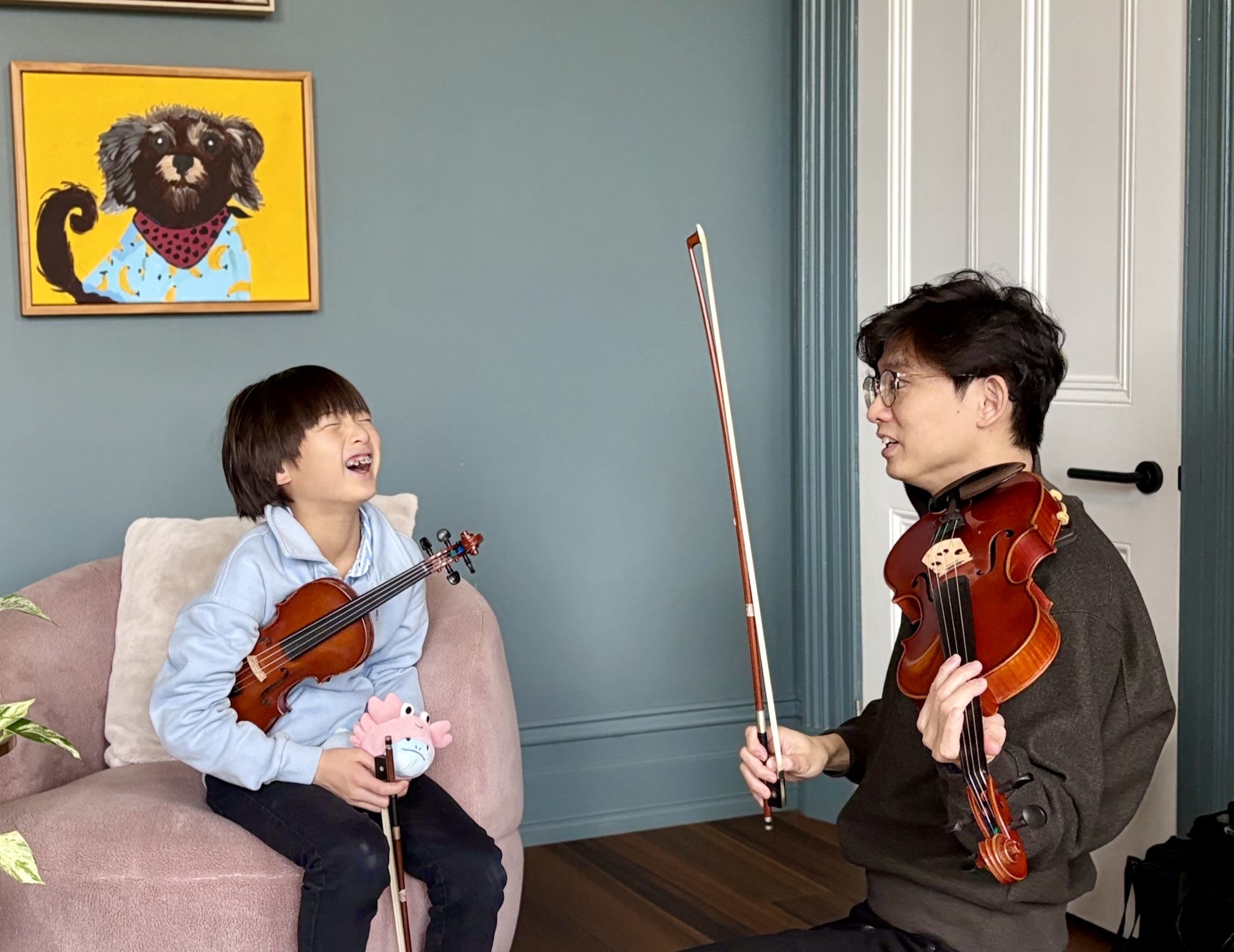
For the Yong family, the Suzuki Strings Program at Trinity has shaped not only their son Elliot’s musical journey, but also their family’s connection to music and the wider Trinity community. We spoke with Elliot’s father, Eric, about the impact the program has had on their lives.
For readers who may be unfamiliar with it, can you tell us a little about the Suzuki program at Trinity and what makes it special?
The Suzuki program is a wonderful way for young children to explore music. Students learn by listening, much like the way a child learns to speak their first language. There is also a carefully sequenced repertoire that students work through as they progress, and daily listening forms the foundation of every student’s journey. The program extends beyond the violin to include other instruments such as viola, cello, piano and double bass.
A common concern about Suzuki is that students may not develop strong music-reading abilities. At Trinity, however, music literacy is very much part of the picture. As students advance, they access additional resources including group literacy lessons and join ensembles, ensuring they develop as well-rounded musicians.
At its heart, this program is about far more than music. It is driven by a deep commitment to character development and a lifelong learning through love for music.
What initially drew your family to Suzuki music education?
We knew very little about it. We first discovered the program when Elliot was attending the Early Learning Centre at Trinity, and he started his journey through the Suzuki Enrichment Program.
At its heart, this program is about far more than music. It is driven by a deep commitment to character development and a lifelong learning through love for music.
How is the Suzuki approach different from traditional music lessons?
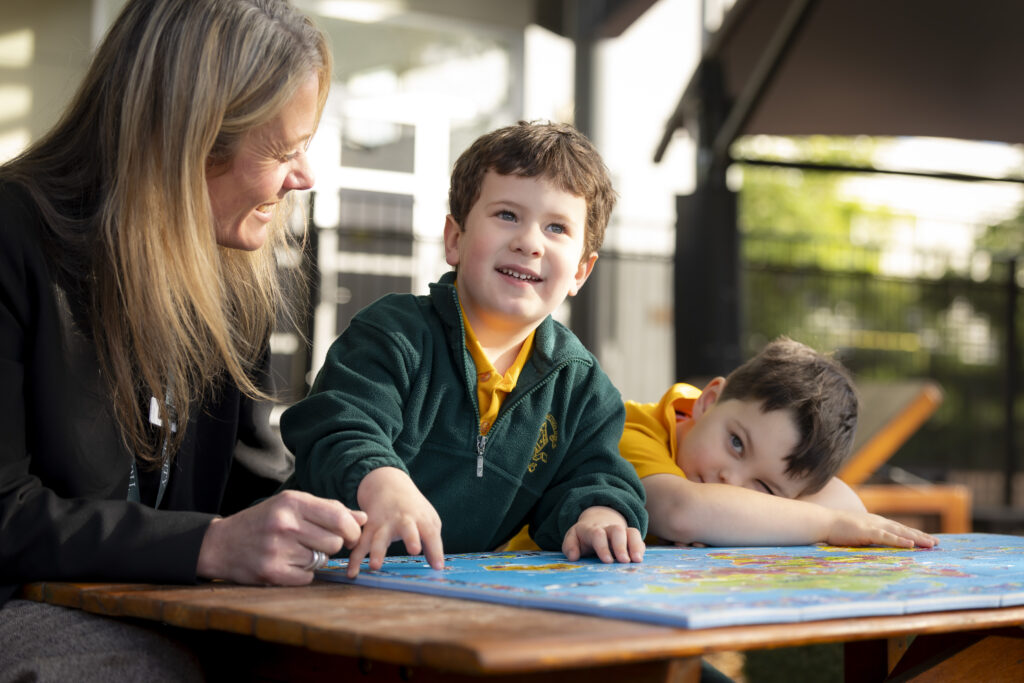
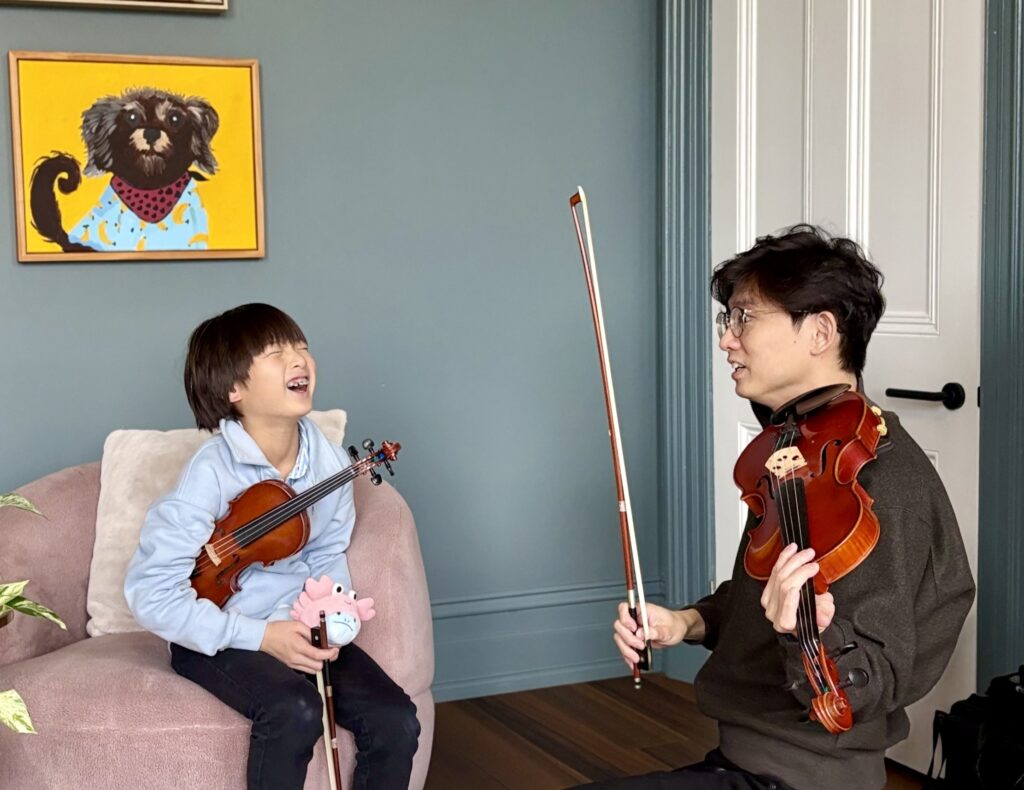
The Suzuki method is built on creating the ideal environment for learning, and that requires three committed participants: the child, the teacher, and the parent. Parents attend lessons not simply as observers, but as active learners – watching, listening and taking notes so they can support practice at home.
Students also participate in group lessons, where playing alongside peers nurtures musical sensitivity and a sense of shared motivation.
What has surprised you most about the program since Elliot began?
What has surprised me most is how naturally and rapidly Elliot developed musical intuition. He has approached music from a completely different perspective to what I might have expected.
Beyond learning an instrument, what skills or qualities have you seen Elliot develop through Suzuki?
The program has given Elliot a remarkable set of transferable skills. His teachers have focused not just on playing pieces correctly but on teaching him how to learn – such as strategies for breaking down challenges, identifying patterns and working methodically
Have you noticed changes in Elliot’s confidence, discipline or perseverance?
Absolutely. Being part of the Suzuki community has given Elliot a strong sense of belonging, and that has made a real difference when it comes to performing. Through lessons, school concerts, assemblies and festivals, he has steadily built his confidence in front of an audience.
What has been one particularly memorable moment in Elliot’s music journey at Trinity?
Every year at the annual string concert, there is a moment when the entire school comes together to perform a single piece – from the youngest students holding their cardboard violins to the graduating Year 12 class. It never fails to move me. In that moment, I am reminded that Elliot belongs to something much larger than himself. He is part of a special community where every member looks out for one another and lifts each other up which is deeply reassuring as a parent.
How does participating in group performances and ensembles impact students socially and emotionally?
Group music-making is, in many ways, a team sport. Elliot has learned to truly listen to the people around him, and to take responsibility for his part within the ensemble. Every player is accountable to the group, and that sense of shared purpose has been a powerful motivator for him. He pushes himself not to let his peers down.
Group music-making is, in many ways, a team sport. Elliot has learned to truly listen to the people around him, and to take responsibility for his part within the ensemble.
What does Elliot enjoy most about being part of the program?
In Elliot’s own words: “I love playing violin with my friends and dad. I like playing the violin to make people happy and can’t wait to learn the next piece.”
The Suzuki program places a strong emphasis on parent involvement. What has that experience been like for you?
It has been both challenging and deeply rewarding. Attending Elliot’s lessons required us to make significant changes to our working lives. With two full-time working parents, it has required some significant career adjustments along the way.
I understand that as a result of the experience, you’ve also started taking violin lessons yourself?
Without any prior knowledge of music, I found it difficult to support Elliot at home in the early stages. I began by demonstrating on his small violin, then borrowed a larger one, and somewhere along the way I realised I was learning music.
The Suzuki approach made music feel accessible in a way I had never expected. I found myself researching finger positions, preparing practice flashcards and reading about the effects of posture on playing. Without quite intending to, I had become a student. Eventually, I asked Elliot’s teacher for formal lessons of my own and she graciously agreed.
How has learning alongside your son shaped your relationship with him?
We share a language now – a musical one. I can see the delight and playfulness in the way Elliot approaches his violin, and I have learned to protect that at all costs. In the moments when practice becomes frustrating, I remind myself not to let my impatience erode something so precious.
What have you personally learned through being part of the Suzuki and Trinity Music community?
The Suzuki community naturally brings families together – at practices, rehearsals, and concerts. Over time, those connections deepen into genuine friendships and a real support network.
More broadly, how have you experienced music education at Trinity Grammar School, and what makes it such a valuable part of student life?
At every interaction with the music department, I have been struck by the dedication and genuine care demonstrated by members of the staff. Working with young children effectively is no small feat, and yet every teacher approaches it with patience, warmth and a clear sense of purpose.
What do you hope Elliot carries with him from this experience in years to come?
What I want for him is simpler than any achievement: that music remains a source of pure pleasure throughout his life – something he returns to not because he must, but because it makes him happy.