- Spring 2026
- |
- From the cockpit to critical care

From the cockpit to critical care
The sound of a helicopter arriving at an emergency scene might seem like an unlikely place to find the intersections of two very different careers. For Julian Pagano (OTG 1996), it is precisely where his two passions have ultimately come together.
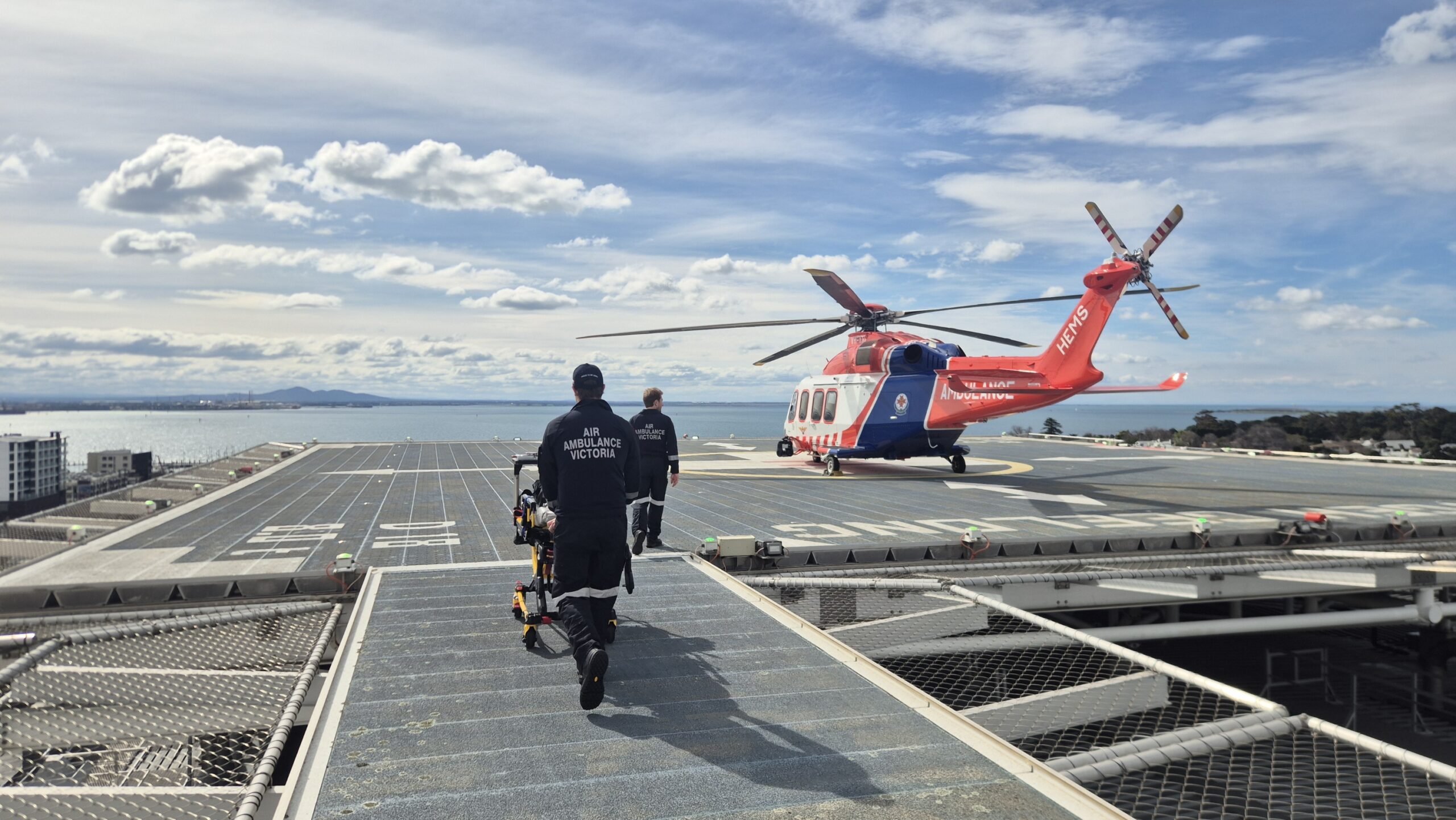
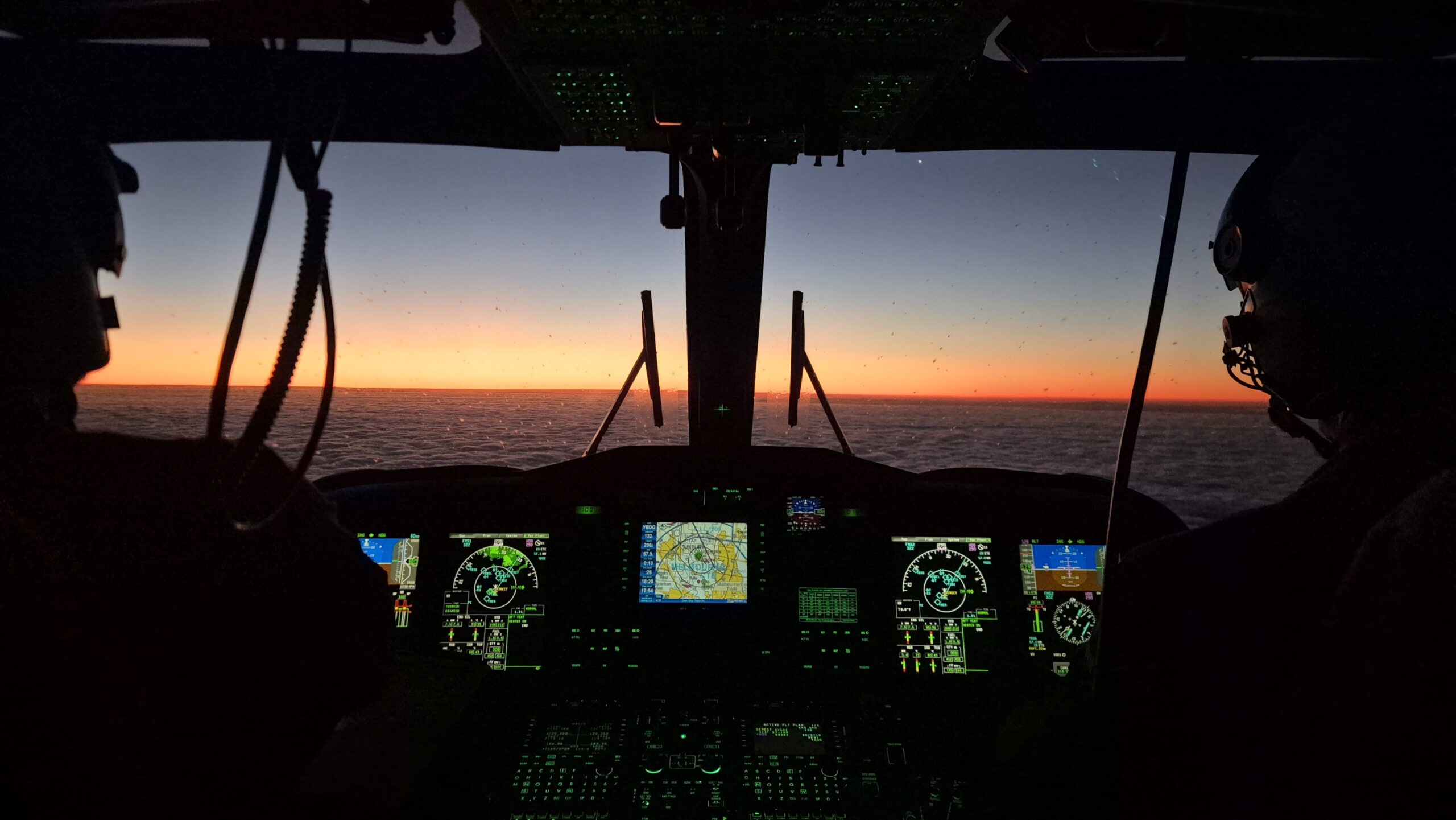
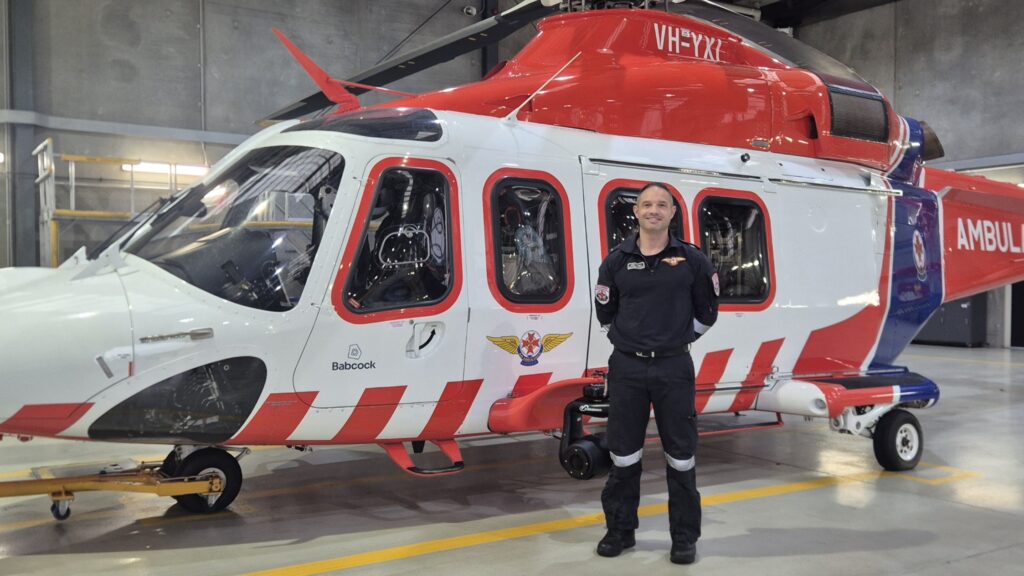
HEMS 5 on Geelong Hospital Helipad about to return to Essendon Base.
After leaving Trinity, Julian initially set his sights on becoming a pilot. He gained a Commercial Pilot Licence, Instructor Rating and Diploma in Aeronautics, but September 11 and the collapse of Ansett Airlines made breaking into aviation difficult.
A series of experiences providing first aid while travelling sparked Julian’s interest in paramedicine. Having grown up with a doctor and nurse as parents, ambulance work felt like a natural fit, combining his interest in healthcare with the variety and unpredictability he was looking for in a career.
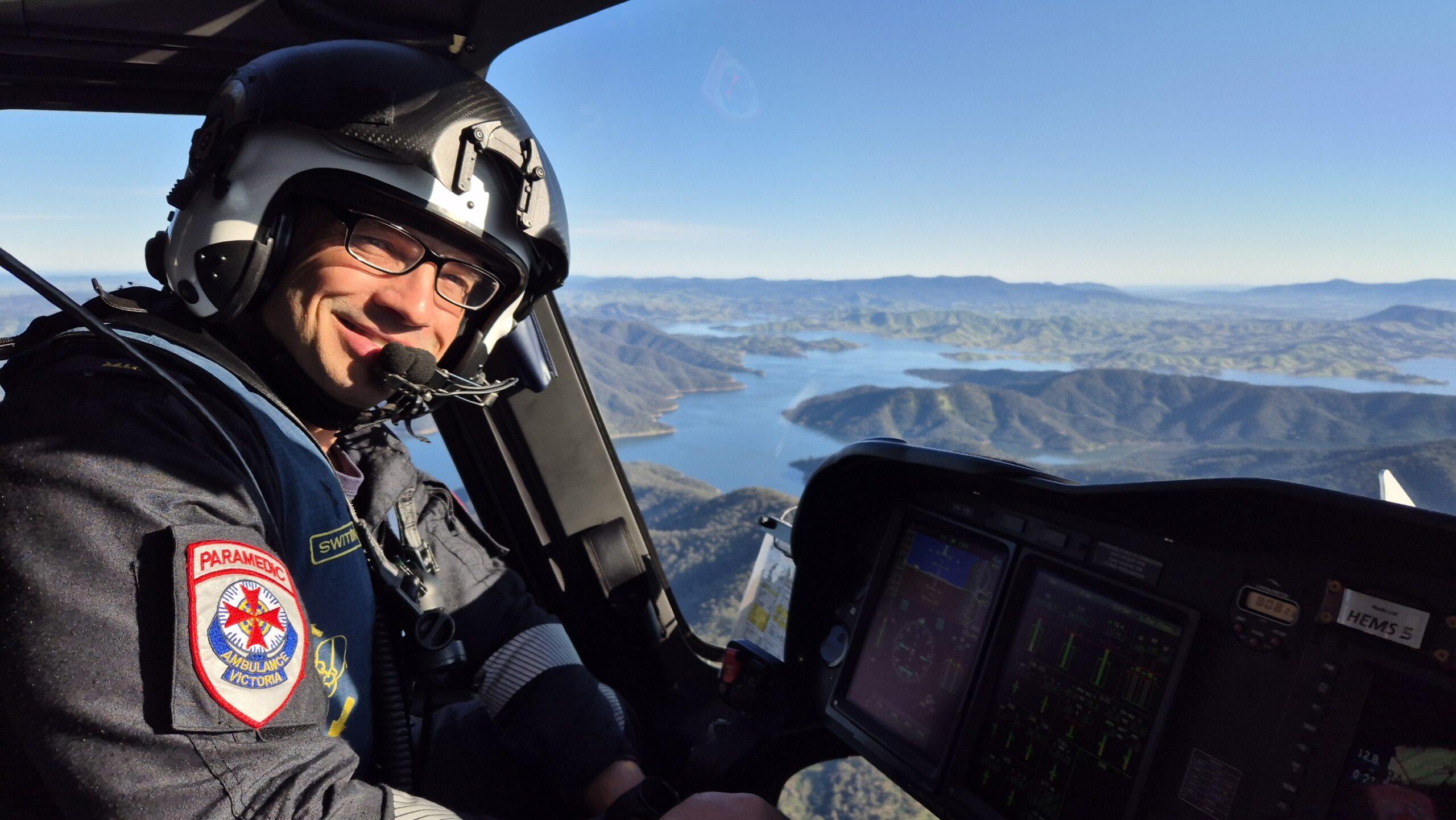
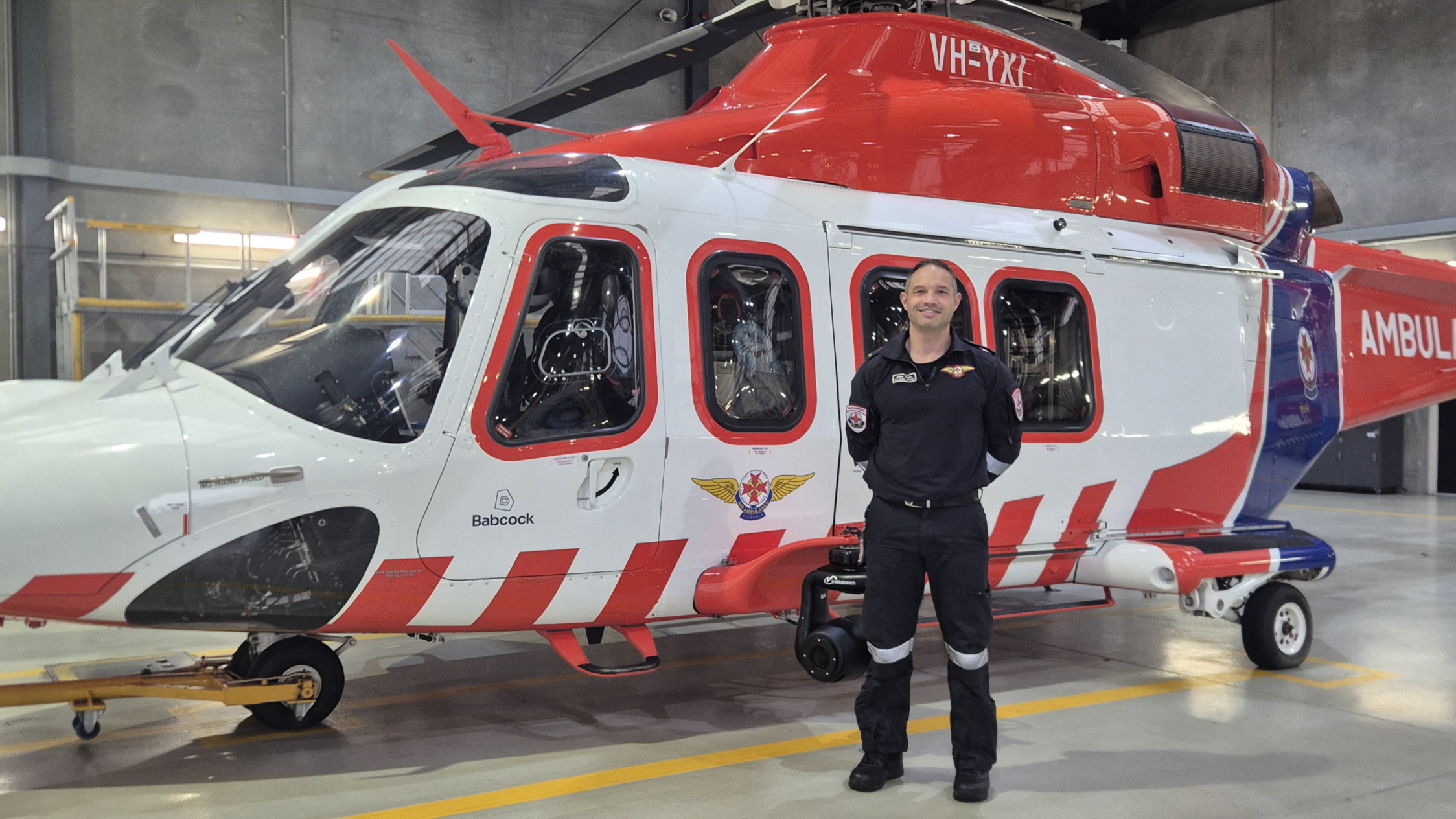
What began as a ‘back-up pathway’ ultimately became a career that brought together two very different worlds. After working as an Advanced Life Support Paramedic, he undertook further study in aeromedical retrieval and began working as a flight paramedic with Air Ambulance Victoria. He later completed a Graduate Diploma in Critical Care and a Masters in Emergency Health, becoming a MICA Flight Paramedic on the Helicopter Emergency Medical Service (HEMS), a role he has held for more than 10 years.
Today, Julian responds to some of Victoria’s most critical emergencies, from road trauma, farming and industrial accidents to strokes and heart attacks. Around five per cent of the team’s work involves search and rescue, including winching injured people from forests, mountains, cliffs and even ships in Bass Strait.
But it is the people, rather than the adrenaline, that have shaped Julian’s understanding of his profession.
“There’s no place for judgement,” he says. “You never know the circumstances that have brought a person to this point.” Whether treating someone experiencing addiction, mental health difficulties or serious injury, Julian believes every person deserves compassion, dignity and appropriate care.
For Julian, care is also about the people you work alongside. In high-pressure situations, good communication and creating an environment where people feel comfortable speaking up are essential.
“Slow is smooth, and smooth is fast,” he says, quoting one his favourite sayings.

There's no place for judgement,” he says. “You never know the circumstances that have brought a person to this point.

That sense of looking out for others is something Julian traces back to Trinity. He fondly remembers teachers who demonstrated compassion, humour and humanity, as well as a Year 6 camp visit to a local ambulance station – an experience he didn’t realise at the time might influence his future.
Above all, Julian says, “mateship” has stayed with him. “In our job, you rely heavily on the people around you, and sometimes the smallest gestures of support can make a big difference.”
After seeing people on some of the worst days of their lives, Julian says what gives him hope is witnessing how often people step forward to help one another. It is a lesson that extends well beyond paramedicine: making a difference is not simply about a profession or a title, but about choosing to look out for the people around us.
In our job, you rely heavily on the people around you, and sometimes the smallest gestures of support can make a big difference.