
- Volume 34 No 1
- |
- Interview with Kirun Goy (OTG 2011)


15
Interview with Kirun Goy (OTG 2011)
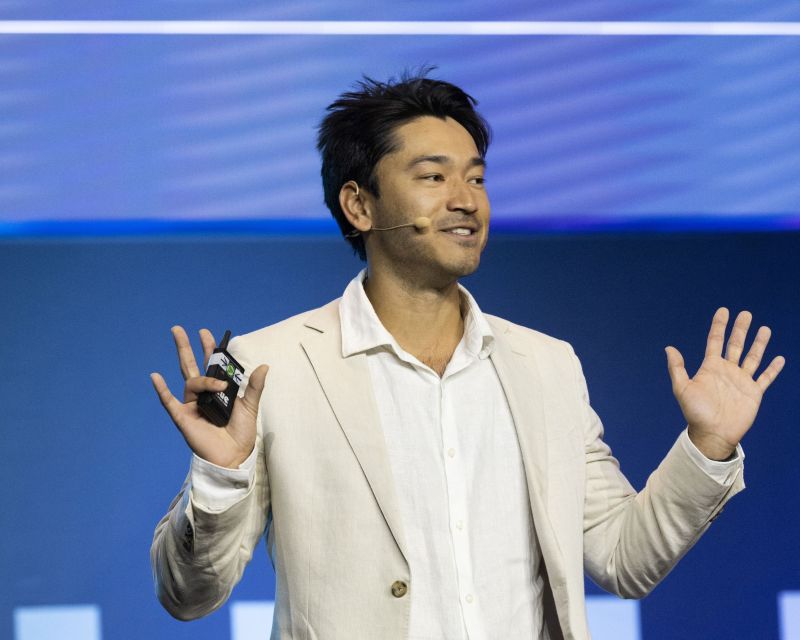
Senior Leadership Facilitator with Harvard Business Impact, host of the BrainTools podcast, keynote speaker and author.
For those in the Trinity community who may not know your work, how would you describe what you do?
Most leaders don’t have a real toolkit. They think they do, but when you ask them what’s actually in it – the cognitive, behavioural and emotional tools they use to find and solve problems – the answers are surprisingly thin. I also found that the leadership research was really boring , written for academics rather than those in the leadership trenches.
So I became pretty obsessed with narrowing that gap: translating research into practical tools that help leaders be more intentional through keynotes, workshops and media.
Your work sits at the intersection of leadership, cognitive science and intentionality – tell us a little bit about that and what first drew you to this space?
One of my favourite quotes is from futurist Kevin Kelly: “Don’t be the best, be the only.” I came across that really early in my life, and it shaped my belief that originality comes at the intersection of things, not from the raw ingredients themselves.
So I (after many, many attempts and iterations) defined mine: brain science, leadership and intentionality.
The brain because it’s always fascinated me,billions of neurons, trillions of connections, somehow producing the complex behaviours we barely notice every day. Leadership because it maps how understanding brain science actually applies to people: there’s an internal world, how you lead yourself, and an external world, the environment around you and the feedback loops between the two. And intentionality, because I want to nudge people to happen to things, rather than have things happen to them. It’s the high agency people that nudge the world in the time they have.
That intersection became my shtick and gave rise to the podcast, the upcoming books and the facilitation I do through Havard Business School.
You’ve worked with leaders across the world. Did you ever imagine this would be your career path when you were at school?
Absolutely not. If you’d told me I’d be doing this in my late twenties and early thirties, I would have laughed.
My path was shaped early by being diagnosed with diabetes when I was six. I was surrounded by doctors, I admired doctors, and so naturally, I wanted to become one. But when I actually got into medicine, I had this quiet but nagging feeling that it wasn’t for me. So as a gun-ho 21-year-old, I took a year off, found a job presenting workshops, and well…something clicked. I found what felt like “play” to me: teaching.
That was my fork in the road. Not studying medicine led me to travel, to presenting workshops around the world, which eventually led me to Singapore, which has been home for 10 years now. One decision and everything that followed cascaded from it.
I’m mindful that this is all hindsight. Everything tends to look clean looking back. But I truly would never have imagined I’d end up living in a different country, doing work I genuinely love, with leaders across the world.
You’ve delivered more than 1,600 workshops and keynotes globally. What have been some standout experiences along the way?
Funnily enough, my first workshops were at schools. I remember going to the UK and presenting at schools that literally looked like Hogwarts. One time, I had to deliver a study skills workshop right after the US Ambassador to the UK had spoken. To say that I felt like an imposter was a massive understatement!
Last year I was invited to speak at a conference called CultureCon in Sydney. I was socialising ideas from the book I have coming out, Lead With The Lights On, and I found myself sharing the stage with people like Michael Bungay Stanier, who wrote The Coaching Habit – literally one of the first books I ever read on leadership. At some point I actually asked him for feedback on my keynote, and we had a conversation about how to make it better. That was my full circle moment – going from reading someone’s work at the very start of my career to standing in the same room, having a meaningful exchange. So that was (very!) memorable.
But beyond individual moments, when I zoom out, it’s really the calibre of people I’ve had the chance to work with. Presenting to leaders at some of the world’s largest companies – – organisations I’d grown up knowing as a consumer – is pretty surreal. There’s something quite humbling about sitting in a room with their leadership teams and thinking: ‘I’ve used this product, I’ve experienced this brand, and now I’m here working with the people who continue to build it.’
I think underlying all of this is the thought that I can’t believe this is actually my job: having the space to share ideas on leadership with people around the world, which I’m genuinely grateful for.
What does your role as a Senior Leadership Facilitator with Harvard Business Impact actually involve day to day?
There are probably three parts to the role:
First, I do a lot of reading, writing and translating: consuming research on leadership and making sense of it so I can provide a platform for leaders across any industry to understand the questions they should be asking themselves individually and collectively.
Second, I have a lot of conversations with those leaders to understand what’s actually happening on the ground, and I try to piece those two worlds together. Like right now, everyone’s talking about what leadership looks like in the AI era: what it means to be an amplified, augmented human, and how you adapt to the (many) potential futures it brings.
Third, I deliver keynotes, workshops, or longer-term programs that can run up to three months with an organisation.
But when I zoom out to the big picture, what I’m really trying to do is bridge cognitive dissonance – – the gap between knowing something and actually doing something about it. Leadership is full of clichés, full of things leaders know but don’t act on. And that’s the gritty work. Because leadership is a verb, it’s not about what you say you do, it’s what you actually do that counts.
What skills do modern leaders need most today that perhaps weren’t as important a decade ago?
I’m convinced that the fundamental skills of leadership don’t really change, because most of them are deeply human. What changes is which skills move to the front of the queue, based on the environment we find ourselves in. And right now, the cost of not building these skills has never been higher.
The pace of change is what’s doing that reshuffling. We’re operating in what’s often called a VUCA environment – volatile, uncertain, complex, ambiguous – and that’s more than just a buzzword. It genuinely describes a world that’s harder (or at least feels harder) to navigate than it was a decade ago. The old playbooks are expiring faster than we can write new ones. And add to that a very human and sticky tendency: status quo bias. We’re wired to keep things the same. Change feels threatening, even when it’s necessary. In an environment moving this fast, that almost primal instinct becomes a liability.
Which is why I keep circling on the same three skills:
First ambiguity tolerance, which is the ability to sit in the unknown without being paralysed by it. Second, metacognition, our ability to think about your thinking, so you can actually update your approach rather than defaulting to what’s always worked. And third, a strong bias to action – moving, experimenting, learning, rather than waiting for certainty that never arrives.
I love asking the question: instead of worrying about what’s going to change in ten years, what’s not going to change? And those three meta skills were important ten years ago, and they’ll be important ten years from now, but the world we’re in right now is making them more urgent than ever.
Your work focuses heavily on helping people “get out of autopilot.” What do you mean by that?
I nerd out on mental models and one I keep coming back to is regret minimisation. Fast forward to when you’re 80, 85, 90 years old, what would you regret doing, and not doing? That filter has been really formative for me, and what it revealed to me is that I’m terrified of living a life on autopilot. Waking up one day and thinking, ‘wait, where did it go?’
And what I’ve observed in some people (myself included) is that we just go through the motions without realising it. Autopilot is often our default setting. We regress to the mean. So the work we must all do is to zoom out and work on our lives – both personally and professionally – not just get stuck in it.
Intentionality is the antidote to autopilot. While it doesn’t guarantee success, it does mean you’re happening to your life, rather than your life happening to you. It reminds us of our agency and that we have a circle of influence . And its people who flex their agency consistently that move from being passengers in their lives, to the driver’s seat.
A lot of your work centers around clarity under pressure and emotional intelligence. Why are these skills becoming increasingly important?
Something that doesn’t get talked about enough in leadership is how lonely it actually is. You’re making hard decisions and unpopular decisions. That can breed self-doubt and even worse, resentment. One of the antidotes to that,and the Stoics had a word for it, is equanimity: grace under pressure. The leaders I most admire can stand steady in the chaos by flexing their impulse control, emotion regulation and management skills to steer the ship through storms.
Clarity in thought, feeling and communication is made harder with the sheer volume of information available to us. We have access to more information than at any point in history, and with that comes the weight of feeling like you need to know all of it before you can move. But leadership ultimately comes down to the quality of your decisions. And good decisions require knowing when to keep gathering information and when to just commit.
And then there’s the wider context leaders are navigating – AI reshaping the world of work, geopolitical instability, the unintended (and unresolved) consequences of an increasingly digital world. Leaders are being asked to hold two poles simultaneously: face the uncertainty themselves, honestly, while creating pockets of certainty for the people they lead. That’s why emotional intelligence is so crucial – to tap into people’s hearts, not just their minds so the collective can thrive, not just survive.
What are some of the biggest challenges you see leaders facing today
Albert Einstein said something to the tune of: “If I had 60 minutes to solve a problem, I’d spend 55 defining it and five on the solution.” And I think that captures one of the hardest things leaders face right now: knowing what to actually focus on.
There’s so much noise. So many seductive and shiny things you could do. The ability (and courage) to cut through that fog,to identify what’s actually going to move the needle,is harder than it sounds. To me, it’s one of the most underrated leadership challenges of the moment. You can do anything, but you can’t do everything.
Which leads directly to the second challenge: alignment. A professor I spoke to recently said something that stuck with me: that great leadership boils down to aligning people to what matters most. The best leaders just align, and then they keep repeating themselves, over and over, because they know the world is driven by entropy. Disorder is the default. Alignment has to be actively maintained, constantly.
The third one is maintaining your humanity. We’re living in a world obsessed with optimisation – doing more with less, creating leverage, moving faster, deploying technology. And in that arms race, it becomes easy to deprioritise the relationships, the trust, the real human connection that leadership actually runs on. Because when you ask leaders what they’re most proud of or their “legacy”, it’s rarely what they achieved. It’s how many other leaders they helped create.
So: focus, alignment, and leading with your humanity. Those are the three I keep coming back to.
You work with people at all stages of leadership. Are there common habits or mindsets that separate effective leaders from ineffective ones?
This is a question I try to approach carefully, because I’m not sure there’s a single profile of an effective leader. Your greatest strengths often sit right next to your greatest weaknesses. And if you tried to build the perfect leader with every ideal habit and mindset, I’m not sure that person would actually be great,because these things work together in ways that are deeply personal.
That said, there are some more meta, first principles commonalities I keep coming back to.
The first is self-awareness. I don’t know many truly effective leaders who don’t know themselves well. And metacognition (thinking about your thinking) is the fuel that starts that engine. That includes knowing not just who you are, but what kind of leader the moment requires. For example, I know myself well enough to say I’m a good wartime leader. When you’re in the trenches and need to push, I’m in my element. But I’m not naturally the best peacetime leader; the consolidation, the harmony, the steadier tempo. Knowing that about yourself isn’t a fatal flaw, especially if your next step is to find people who are better at that thing that you are.
The second is what I’d call curious humility. Being curious enough to ask the important questions, but humble enough to admit you don’t have the answer and then actually going to find it. Microsoft CEO, Satya Nadella puts it well: “Don’t be a know-it-all, be a learn-it-all.” And I’d add that it’s not just about learning. It’s about unlearning too. What got you here won’t always get you there, so taming our ego (as hard as it can be) is mission critical.
The third, and perhaps the most underrated, is the willingness to have uncomfortable conversations. Effective leaders speak with their teams often, and they don’t avoid conflict. Because if you avoid conflict, you end up with something worse: unresolved tension, eroded trust and problems that fester. Conflict in leadership isn’t a sign you’re doing it wrong. It’s often a sign you’re doing it right. What matters is how you respond to it, and creating a psychologically safe environment so it’s visible.
What do you love most about the work you do?
I’m addicted to that moment where you’ve been wrestling with something really difficult.It might take hours, days, a week – and then it finally clicks. The penny drops, everything fits into place. That’s what I’ve loved since I was young at school. That feeling of ‘aha, I get it now.’
What I love about what I do is that I get to help facilitate that moment for other people. You can’t guarantee that everyone in the physical or virtual room is going to have an insight,all you can do is nudge the odds of one happening. That’s how I think about my role: I’m an agent of probability. I try to create the conditions for leadership insight, because I can give people all the information in the world, but the real unlock happens when something they hear collides with a problem they’re sitting with or a question they haven’t been able to answer.
Looking back, what are your strongest memories of your time at Trinity?
When I reflect on my time at Trinity, all of my strongest memories centre around relationships.
The first that comes to mind is playing First XI Soccer. That was probably my earliest real window into leadership – what it means to try and make the people around you better, and what’s so compelling about a collective mission. We might not have won a premiership (that would have been nice!), but looking back, that’s almost beside the point. It’s a reminder that not achieving your end goal (even if you want it badly) doesn’t mean it wasn’t worth it.
The second is my teachers, particularly in Year 12. They were stellar examples of what leadership actually looks like in practice. People going out of their way, asking how they could best serve the person in front of them. That selflessness,being genuinely useful to someone without needing the applause,was a really formative lesson on what leadership is at its core.
And then of course the friendships. 14 years on, I’m still really close with my core group from Trinity and that’s despite the fact that I’ve been in Singapore for a decade. We’ve maintained that connection across distance and time. I’ve repeated this a lot across this, but everything for me comes back to deep relationships.
Were there particular mentors or experiences at Trinity that influenced you?
The one that stands out most is a soccer trip in Year Ten: travelling to Guangzhou and Hong Kong with Michael Moreira and Brendan Mahoney to play soccer. It was my first time going overseas outside of family trips, and looking back, I think that was the experience that gave me the travel bug. The (now obvious) realisation that the world is bloody massive, and there I was, doing something I loved, in a completely different country on the other side of the world, with my peers. That was a keystone experience. I think it genuinely planted the seed for why I ended up travelling, leaving Australia, and eventually making Singapore home.
As for mentors,I almost feel like I had too many to count, which is its own kind of answer. I now believe that great mentors open doors in your mind you never knew existed. A big driver of that is instilling belief in you, when you’re experiencing doubt. And when I reflect on Trinity, it wasn’t one specific person,it was all the different teachers acting as mentors in different ways. Every subject opened a different pathway, a different way of asking questions. And then your older peers too. I still remember who my Year 11/12 buddies were when I was in Year 7/8.
What advice would you give students about leadership?
It might sound cliché by this point, but leadership starts with the self. And really understanding who you are and who you want to become – these big (and often intimidating) questions – aren’t answered in a vacuum. It happens through experience: working with people, communicating with people, spending time with people. Understanding how you like to communicate, what frustrates you, your strengths, your weaknesses, what comes naturally and what you need to work on. Having the ability to think about your thinking – to open doors in your mind through the open questions you ask yourself,is the single most important thing I’d encourage any young person to develop. That is where the bones of leadership begin.
The second piece is this: leadership is an inherently emotional experience. And it can be very easy – especially as young men – to discount emotions when you’re not sure what you’re feeling or what the people around you are feeling. It’s a fuzzy mess. But all the great experiences in life, the good, the bad, and the ugly, are inherently emotional. So learning to understand your own emotions (rather than suppressing or ignoring them), and to genuinely tune into the emotions of the people around you, is a huge leadership lever.
Finally, keep in mind that leadership centres on imperfection. You’re going to get plenty of things wrong (I certainly have) more times than you can count. But that isn’t a sign you’re failing,it’s just part of the learning process. John Dewey says: “You don’t learn from experience. You learn by reflecting on your experience.” Taking these words to heart means there’s so much gold in leaning into the messy, imperfect process that leadership is and using these mistakes as a platform to be better.
In a world full of distraction and constant noise, how can young people learn to think more clearly and intentionally?
Another quote. Sorry! Richard Feynman, the Nobel Prize-winning physicist, has a line that was my phone screen for a while: “The first rule is you must not fool yourself and you are the easiest person to fool.” So much of what clear thinking actually requires starts there.
So, the first thing I’d say is: be intentional about your information diet. You are what you eat. We live in a world dominated by short-form, sensationalist content, and it’s very easy to let that shape your worldview without realising it. You don’t need to spend your life listening to five-hour podcasts or reading thousand page books. But you do need to periodically stop and ask: what do I actually believe, and where did that come from? Did I arrive at that myself, or did it just seep in? Being aware of your own biases is the fulcrum for clearer thinking.
The second is that clear thinking is downstream from clear writing. Journal. Put your thoughts on paper and see what you actually think and why. Writing a book has been the most formative and most difficult thing I’ve done well…ever. Because what I thought I knew, I didn’t really know. There’s something about seeing your thinking written down that exposes all the intellectual and emotional gaps. And in a world where we can increasingly offload our thinking to AI or elsewhere, the person who takes ownership of their thinking, who wrestles with the ideas, who can find their blind spots, is the person who – – no matter what – can think for themselves.
The third, and this one might be the most countercultural, is that you don’t actually have to have an opinion on everything. You’ll feel like you have to. But you don’t, it’s more than okay to say ‘I don’t know’. That’s what curious humility really means: being curious enough to want to find out, and humble enough to admit you’re not there yet. When you pair those two things together, that’s rocket fuel for real thinking and learning.
What’s something people often misunderstand about leadership?
It’s less about what people misunderstand about leadership itself, and more about the pathway people take to try and become good at it. And the most common trap I see is mindless mimicry.
People pick a famous leader like Steve Jobs or an Elon Musk or some figure on the world stage and assume that’s what great leadership looks like. And there’s nothing wrong with studying great leaders,you absolutely should. Understand what they do well, and equally, understand what you’d want to avoid. Both sides of that are important. But what people tend to do is copy without really interrogating why. Why do they do what they do? They adopt the leadership surface without doing the deeper work of understanding what kind of leader they actually want to become.
Great leadership isn’t a costume you put on. It’s the intersection of who you are as a person and who you want to become as a leader. For example, I’m a gregarious person. I love connecting with people, but I’ve historically found it difficult to have hard conversations. I’d just avoid them. That’s something I’ve had to consciously work on over time: setting clear boundaries, being radically candid. If I had just copied some other leader, it’s likely I’d have fooled myself and covered over my leadership cracks. I had to figure out that it was mine to fix and improve.
So, my answer is this: go and study the “greats”, absolutely. But don’t outsource your leadership identity to them. Your goal isn’t to become someone else’s version of a great leader. It’s to become your version of great.
What are you currently curious about?
The question that’s really sitting with me right now, the one that’s probably on most people’s minds, is: what does leadership look like in the age of AI?
My current conviction is that most of leadership isn’t going to change at the emotional level. How you build relationships, how you build trust, how you motivate people,the principles underneath these are timeless. But there are new horizons, and anytime there’s a genuine technological inflection point (like AI), the environment can shift so rapidly that you get left behind without realising it.
So what I’m actively wrestling with is knowing there’s a core to leadership that must be preserved, while also knowing there are things that absolutely need to be unlearned. Put into questions they’d be:
- What are the beliefs/skills/tools leaders need to learn right now to flourish?
- What outdated beliefs/skills/tools do leaders need to unlearn to create space for the new?
Those two questions don’t have clean answers yet. But I think the leaders who are asking them right now are already miles ahead of the ones who aren’t.
What’s next for you?
I’ve been working on two books for a while now, and getting them out into the world is what’s top of mind.
The first is called Imperfect Learning – and it’s the one I’m most nervous about, honestly, because it’s closest to my heart. It’s an homage to the work I’ve always loved doing with students: learning how to learn, finding tools that young people can actually use to make school less hard. I was fortunate enough to share some of that work with student leaders last November, and that was (a very needed!) reminder on why this book matters.
The second is called Lead With The Lights On. It’s a leadership book centred on metacognition. The premise is simple: you can lead more intentionally when you have tools to think about your thinking. It’s a blueprint to help leaders do exactly that.
Beyond the books, I’m continuing on the same trajectory, trying to give people tools that help them live more intentionally, personally and professionally. The north star hasn’t changed, so I’m excited to keep heading down that path.